Cape Coral / Fort Myers / Lee County
Pool Screen Repair & Cage Rescreening in Lee County, FL
Lee County Pool Screen Repair helps homeowners in Cape Coral, Fort Myers, Bonita Springs, Estero, Lehigh Acres, and nearby communities with torn panels, full cage rescreening, pet screen, lanai screen repair, and storm-damaged enclosures. If you are not sure what the cage needs yet, call or fill out the form and describe what you are seeing in plain language.
Pool enclosures in Cape Coral and Fort Myers live a hard life: Gulf wind, salt air, summer UV, pets, storms, and the occasional palm frond that enters like it owns the place. If your screen is sagging, ripped, chalky, or popping out of the spline, the finished picture is easy to see: tight new mesh, clean sightlines, and a pool service deck you can use without waving bugs away every ten seconds.
Homeowners coordinating enclosure work with broader pool upkeep can keep both scopes in one property plan.
Pool screen problems Lee County homeowners call about
Pool Cage Rescreening
Full enclosure rescreening replaces brittle, faded, or storm-damaged mesh with tight new screen that looks clean from the pool deck and the street.
Pool Screen Repair
Single-panel tears, door screens, corner blowouts, and sagging sections get repaired before bugs, leaves, and lizards start treating your lanai like an open invitation.
Screen Enclosure Repair
Loose spline, bent doors, frame questions, and panel problems get checked so new mesh has something solid to hold onto.
Hurricane Damage Repair
After wind tears panels loose or twists a section, the job starts with stabilizing the enclosure and getting the screened space usable again.
Lanai Screen Repair
Lanai screen repair keeps afternoon shade, breeze, and bug control working without turning one bad panel into a full-cage project.
Pet Screen Repair
Dogs and cats love your lanai almost as much as you do - unfortunately they show it. Heavy-duty pet-resistant mesh handles claws, nose pressure, and the daily enthusiasm of a 70-pound Lab without blowing out every season.
Common Pool Screen Damage and Finished Repair Goals
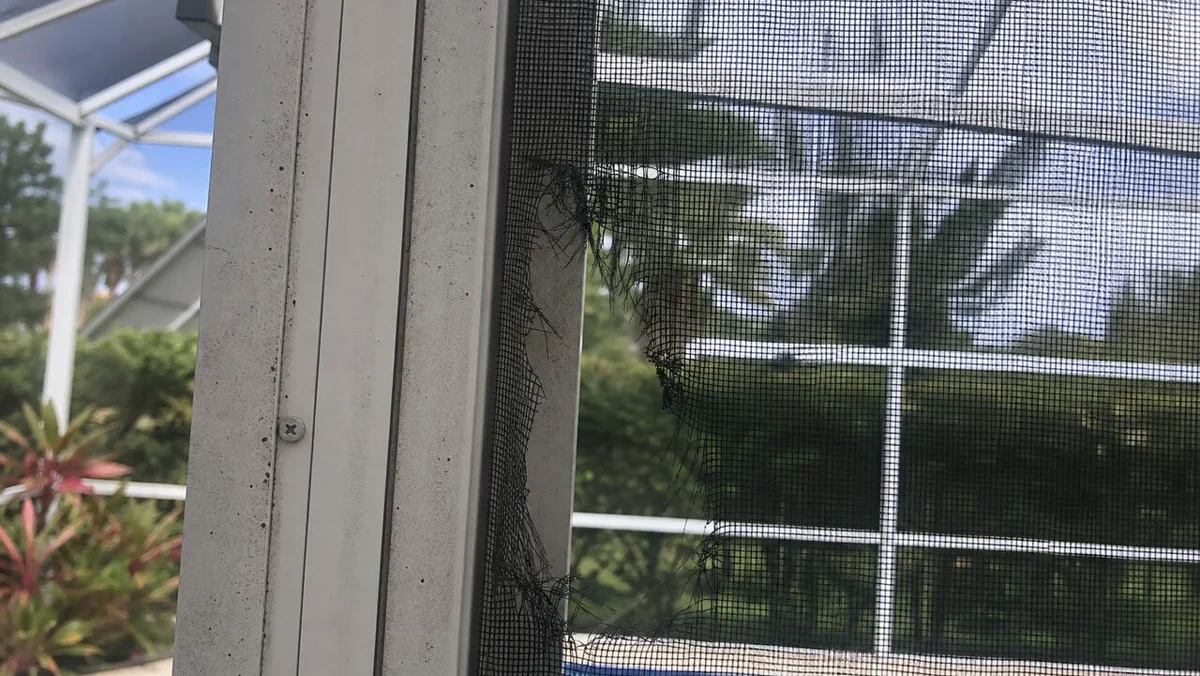
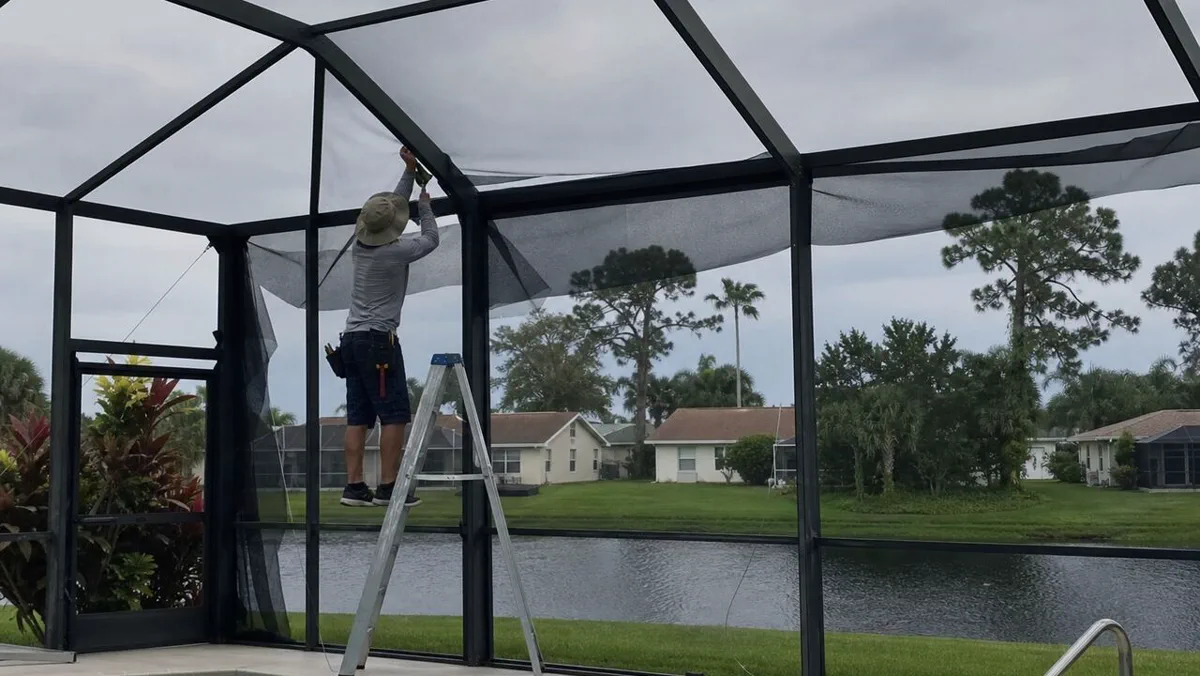
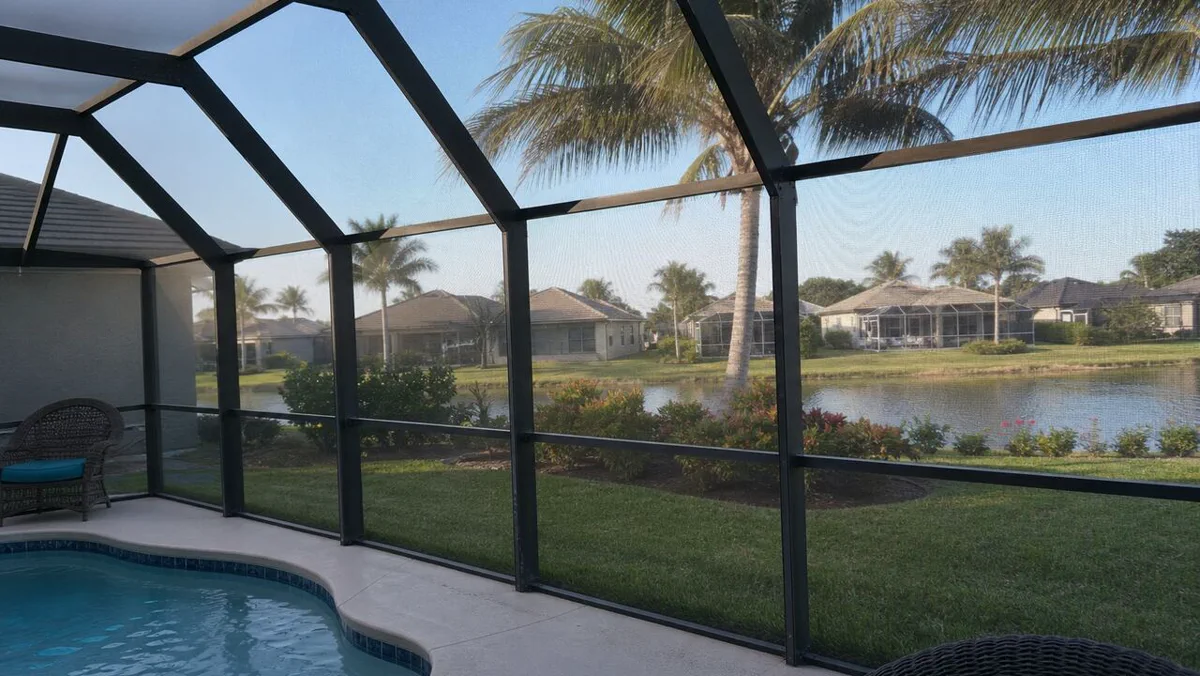
These examples show common Lee County screen conditions and the clean, tight result homeowners usually want.
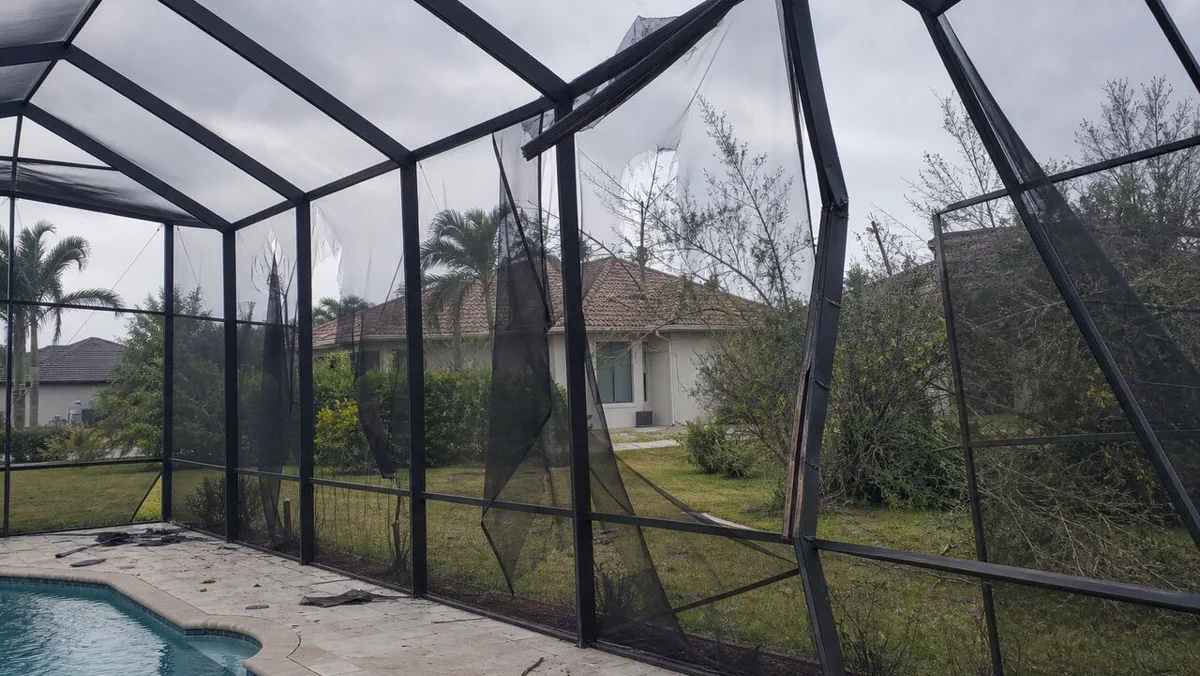
Before
Storm-damaged panel condition that may need repair or rescreening
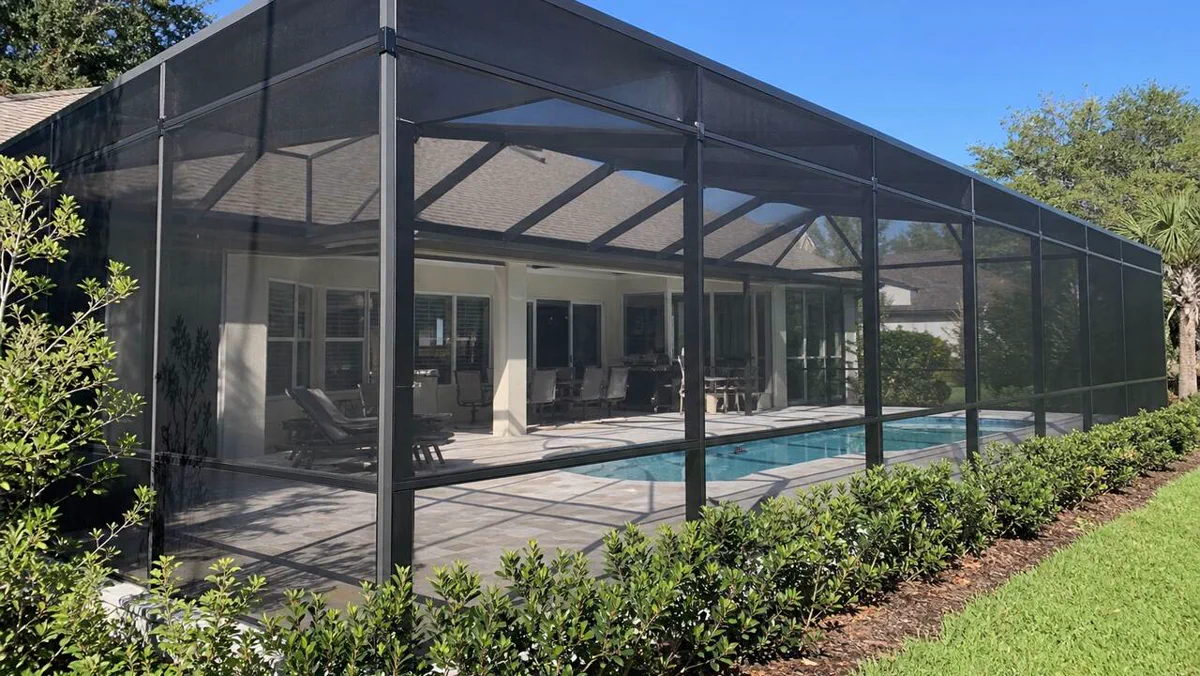
After
Finished screen appearance with clean mesh and enclosure sightlines
Ready to get yours looking like this? Request Pool Cage Help
Why Lee County pool cages need more attention than most
Lee County pool cages work harder than pool enclosures in most parts of the country. Cape Coral alone sits in one of the most hurricane-exposed coastal markets in the United States, and when Category 3 or stronger winds push across wide canals and open neighborhoods, standard mesh is often the first thing to fail. A single loose panel can turn into a zipper effect across the cage. Once wind gets under a section, spline pops, panels flap, and the whole enclosure starts sounding like a sailboat that lost its manners. That is why routine wear should not be ignored here. Small weak spots become bigger problems fast when the next storm line rolls through.
Salt air is the second problem. Homes near Charlotte Harbor, Pine Island Sound, the Caloosahatchee, and the Gulf deal with moisture that inland Florida enclosures do not see at the same intensity. Aluminum frames hold up well, but fasteners, corners, doors, spline channels, and older coated surfaces can still oxidize. The white chalky residue homeowners see on older frames is not just cosmetic. It tells you the enclosure has been living in a salty, humid environment long enough that the frame deserves a closer look before new mesh goes in.
Then there is UV. Southwest Florida sun is not gentle. Screen fabric that might last fifteen years in a milder northern market can look tired in seven to ten years here, especially on west-facing sections and canal lots with reflective water exposure. The mesh gets brittle, fades from deep charcoal to dusty gray, and starts tearing around the edges. Canal lots add another layer because the water-facing sides of enclosures stay humid and exposed. Lee County also has dense HOA coverage, which means mesh color, mesh density, finished appearance, and visible repairs get noticed quickly. A clean rescreening job is not only about comfort. It keeps the home looking maintained in communities where that matters.
What affects the cost of rescreening in Lee County
The biggest cost driver for pool cage rescreening is enclosure size. A small single-story lanai with a few wall panels is a very different job from a full two-story cage with roof panels, door sections, kick plates, and multiple access points. Square footage, panel count, height, and how many roof panels are involved all affect labor. If a quote discussion sounds too simple without accounting for cage size, panel count, and height, the scope may change once the enclosure is reviewed.
Mesh type also changes the price. Standard 18x14 fiberglass is the common choice for many Lee County communities because it balances airflow, visibility, and cost. A tighter 20x20 no-see-um mesh costs more but can be worth it near canals, mangroves, and water-heavy neighborhoods where tiny biting insects make evenings miserable. Pet-resistant mesh costs more again because it is thicker and stronger. Solar screen can reduce glare and heat on west-facing enclosures, but it also changes visibility and airflow. Aluminum screen is more durable than fiberglass in some applications, though it is not the default for every residential cage.
Frame condition is the part homeowners forget until it matters. Straight, clean aluminum can accept new screen efficiently. Bent sections, loose doors, corroded fasteners, failing spline channels, or storm-twisted corners need attention first. Single-story work is usually faster and safer than two-story work because roof access and equipment needs are different. Post-storm work may also involve insurance documentation, scheduling pressure, and hidden damage that is not obvious until loose mesh comes off. In the Cape Coral and Fort Myers market, small panel repairs may be a few hundred dollars, routine single-story rescreening often lands in the low thousands, and larger or two-story cages can climb higher. Those are ballpark planning numbers, not final pricing. Clear repair-scope notes should explain why the work falls where it does.
Serving all of Lee County
Lee County is not one uniform pool screen market. Cape Coral has miles of canal frontage, strong hurricane exposure, and many neighborhoods where pool cages are practically part of the home. Canal lots often need tighter attention to no-see-um control, salt air, and wind exposure. Fort Myers has a mix of older and newer construction near the Caloosahatchee, with some enclosures showing age in the frame while newer communities care heavily about appearance standards.
Bonita Springs brings Gulf access communities, seasonal residents, and homes that may sit unused for stretches before owners return and notice screen damage. Estero includes many newer developments with detailed HOA specifications, so mesh choice and finished appearance matter. Lehigh Acres is more inland, which changes the salt-air profile, but sun, storms, pets, and routine wear still create plenty of screen repair needs. Marco Island and nearby coastal areas deal with extreme salt air and barrier-island exposure that can age frames and fasteners faster than homeowners expect. Sanibel and Captiva remain highly aware of hurricane damage and recovery after Ian, so enclosure work there often comes with more questions about durability, timing, and documentation.
The practical point is simple: where the home sits changes what should be checked. A Cape Coral canal cage, an Estero HOA lanai, and a Lehigh Acres backyard enclosure may all need screen repair, but the pressure points are different. A useful repair plan accounts for those differences.
Types of screen mesh: which is right for your enclosure
Screen mesh is not one-size-fits-all. Standard 18x14 fiberglass is the everyday choice for many pool cages because it gives good visibility, airflow, and price. It is also the mesh many HOAs expect unless they specify otherwise. For homeowners who mainly want a clean enclosure that keeps out leaves, larger bugs, and most mosquitoes, standard mesh often makes sense.
A 20x20 no-see-um mesh has a tighter weave. It blocks smaller biting insects and is popular near canals, mangroves, preserves, and damp lots where evenings can turn into a bug buffet. The tradeoff is slightly reduced airflow and visibility compared with standard mesh, plus higher cost. Pet-resistant mesh is heavier and stronger. It is not magic, but it handles claws, nose pressure, excited dogs, and repeated contact much better than standard fiberglass. If your Lab treats the lanai screen like a suggestion, pet mesh may be worth discussing.
Solar screen is designed to reduce heat and UV glare, especially on west-facing sections where afternoon sun beats into the pool deck. It can make a lanai more comfortable, but it changes the look and view, so homeowners should think through where it belongs. Aluminum screen is more durable than fiberglass and may be considered in high-wear or high-wind situations, though it is not the right default for every panel. The best mesh is the one that matches how you actually use the enclosure, what your HOA allows, and what problem you are trying to stop from happening again.
What quality pool screen work should feel like afterward
A pool cage is not just a decorative frame around the pool. In Lee County it is shade, bug control, leaf control, privacy, safety, and part of how the home feels day to day. When the screen fails, people notice immediately. The pool deck collects leaves. Mosquitoes show up at dinner. Pets find weak panels. Guests point at the torn corner everyone has been trying to ignore. The repair is not glamorous, but the result is very easy to feel: the lanai becomes usable again.
Quality work also shows in the small details. Screen should be evenly tensioned, not stretched so hard it warps or left so loose it sags. Spline should sit cleanly in the channel. Door screens should close properly. Panel edges should look intentional, not chewed up. If a frame has corrosion, bending, or loose hardware, that should be addressed before fresh mesh hides the warning signs. A cheaper job that ignores the frame can look fine for a week and then fail when the next storm or pet impact tests it.
Homeowners should also think about timing. Waiting until hurricane season is underway can mean longer schedules and higher urgency. Waiting until every panel is brittle can turn a manageable repair into a full rescreen. Waiting until an HOA letter arrives adds stress nobody needs. If the cage already looks faded, chalky, loose, or torn, getting it handled before the busy season is usually the calmer path. The best service experience is one where the homeowner gets clear scope guidance, a realistic schedule, and a finished enclosure that looks like it belongs on the home.
Service areas
From Cape Coral canal homes to Fort Myers river neighborhoods and Estero HOA communities, every enclosure has local details that matter.
What to Mention When You Call About Pool Screen Repair
Storm and wind damage
After strong weather, you can simply say whether panels tore, spline pulled loose, or any frame sections look twisted. A follow-up call can narrow down what needs to be checked.
Cape Coral and Fort Myers enclosuresHOA and visibility details
If an HOA has mesh color or visibility rules, mention that when you know it. If you are unsure, the follow-up call can help identify what may need to match.
Bonita Springs and Estero communitiesPet and high-wear panels
If pets use the lanai, say which door or lower wall panels take the most wear. That is enough to start a pet-screen request.
Lanai and pool cage use casesAccess and scheduling
A short note about gate access, cage height, furniture, landscaping, or multiple damaged panels can help, but it should not delay your call or form request.
Practical repair planningLee County Pool Screen Repair FAQs
Where should I start if my pool cage has hurricane or storm damage?
Call or fill out the form and describe the visible problem in plain language. No homework is required before reaching out; the follow-up call can ask for anything else needed to understand the damage and next step.
How do I know if I need rescreening or a full replacement?
A few torn panels often point to spot repair or rescreening, while bent frame sections, loose doors, or heavy corrosion can change the scope. You do not need to make that call on your own before reaching out. If sections flex, are visibly bent, or show white chalky corrosion that goes deeper than surface level, the frame may need attention before new screen goes in. Salt air in Lee County is brutal on aluminum over time. Worth checking before anyone discusses rescreening on a frame that will not last another season.
How do HOA rules affect pool screen repair in Lee County?
HOA rules can affect mesh density, color, door hardware, and visibility from the street. Most Lee County communities use common charcoal or silver mesh options, but it is worth checking current community requirements when they apply. Some communities updated their requirements after recent storms. A good rescreening company will know this and confirm compliance before starting. If yours does not ask, that is worth noting.
What does quality rescreening actually look like?
New screen fabric is taut, evenly tensioned, and sits clean in the frame with no gaps. From inside, you get that screened-in feel back - no ripped panels rattling in the breeze, no gaps letting in every mosquito in Lee County. From the street it looks like a well-maintained home, because it is.
How long does rescreening actually take?
Most single-story pool cages in Cape Coral or Fort Myers take half a day to a full day depending on size and panel count. Two-story or oversized enclosures may run into a second day. Weather matters too. Mesh installation in high wind or rain gets rescheduled. The follow-up call should give you a realistic time window before work is scheduled.
Can I get just one or two panels replaced instead of the whole cage?
Yes, and often that's exactly the right move. If your frame is in good shape and only a few panels are blown out or torn, spot rescreening is faster and cheaper than a full job. If the mesh is showing consistent wear across the whole enclosure, a full rescreen usually makes more financial sense than patching repeatedly. A screen repair professional can help you decide which situation you are in.
What should I do if my enclosure took hurricane damage?
Start by describing the visible damage, which panels or doors seem affected, and whether the frame looks bent or loose. If storm documentation or insurance questions are involved, confirm requirements directly with your insurer before scheduling repair work. Post-storm scheduling can fill quickly in Cape Coral and Fort Myers, so it helps to start the request early.
What screen mesh works best for pets?
Pet-resistant mesh is heavier than standard fiberglass and holds up better against claws, paws, noses, and the occasional dog who believes the squirrel outside is a personal challenge. It costs more than standard mesh, but it can save repeat repairs on busy lanais.
What Happens After You Request Pool Screen Help
The easiest pool screen project is the one that starts with a clear goal. Some homeowners want the entire enclosure to look fresh again because the old mesh has faded unevenly. Some only care about stopping bugs after two roof panels blew out. Others are trying to satisfy an HOA notice before a deadline. Those are different jobs, and they should not be discussed or scheduled as if they are the same. When you call Lee County Pool Screen Repair, the first step is matching the work to the actual problem: single panel repair, partial rescreening, full cage rescreening, pet screen upgrades, door screen repair, or storm damage cleanup.
Before work begins, the enclosure should be viewed as a system. Mesh, spline, frame channels, doors, fasteners, kick plates, and roof panels all affect how the finished cage performs. A brand new screen panel installed into a dirty or damaged channel may not hold as long as it should. A door panel with failing hinges may continue to rub and tear the mesh. Roof panels that are stretched unevenly can look wavy from the pool deck. These details are why the lowest quote is not always the cheapest outcome. A clean repair done correctly can save repeated callbacks and keep the lanai comfortable longer.
Homeowners often ask whether it is better to patch one section now or rescreen the whole cage. The answer depends on the age of the existing mesh. If the enclosure is only a few years old and one panel tore because of a branch, spot repair is usually reasonable. If the entire cage is ten years old, faded, brittle, and popping at the corners, replacing one panel can make the rest of the enclosure look worse by comparison. It can also lead to a cycle where a new panel gets installed every few months while the old panels keep failing. In that case, a full rescreen may be the calmer and better value.
Timing also matters. Lee County gets busy after major storms, during seasonal arrival windows, and when HOAs send community-wide maintenance letters. If you know the mesh is already brittle, scheduling before the rush gives you more flexibility. Waiting until every contractor is booked after a named storm can mean longer delays and fewer choices. For seasonal homeowners, checking the cage before leaving town or before returning for winter can prevent surprises. A quick repair before the home sits empty is usually easier than discovering torn panels after leaves, bugs, and weather have had months to enter the pool area.
What homeowners should expect from a professional visit
A pool screen repair visit should feel organized. The screen professional should identify the damaged sections, note the mesh type, look for loose spline, check doors and access points, and explain whether frame issues are visible. You should not have to become a screen expert to understand the recommendation. If pet mesh is suggested, it should be because pets are actually causing wear in reachable panels. If no-see-um mesh is suggested, it should be because the property location or insect pressure makes the tighter weave useful. If a full rescreen is suggested, the age and condition of the current mesh should support that recommendation.
Good communication matters as much as good tools. Homeowners need to know what will happen with patio furniture, pool access, gates, pets, and scheduling. If a clear pool deck will be needed, that should be stated before arrival. If roof panels require different timing because of wind, that should be explained. If rain changes the schedule, the homeowner deserves a simple update. Most frustration in home services comes from silence, not from the work itself. A straightforward process helps everyone.
The finished job should be easy to inspect. Walk the pool deck and look for loose edges, uneven tension, gaps at the spline, missed panels, door alignment, and leftover scraps. A proper cleanup matters. Old spline, screen pieces, and fastener debris should not be left around the pool, landscaping, or patio furniture. The enclosure should look tighter, cleaner, and calmer than it did before the crew arrived. If a homeowner paid for a full rescreen, the difference should be visible immediately.
Why Lee County Conditions Change the Repair Plan
Lee County conditions matter because homes share common patterns. Cape Coral canal properties often face stronger open wind and bug pressure near the water. Fort Myers homes near older neighborhoods may have cages with aging fasteners or older frame sections. Bonita Springs and Estero communities often have strict HOA appearance expectations. Lehigh Acres homes may be less coastal but still deal with sun damage, pets, and storm wear. A screen repair plan for these neighborhoods understands how the same repair can require different judgment depending on where the home sits.
Hurricane history is part of that judgment. After a serious storm, homeowners may see obvious torn screen but miss subtle frame movement, lifted roof panels, or loosened doors. Insurance records may also matter. Clear notes about visible damage and a written scope can help homeowners keep records. Not every screen repair involves insurance, but storm damage records are usually easier to handle early than recreate later from memory.
Salt air is another reason local judgment matters. Near the river, canals, and coastal areas, corrosion can hide where panels meet the frame or where fasteners sit. A rescreening job should not pretend corrosion does not exist. Sometimes the right answer is simply noting it and proceeding. Sometimes a homeowner needs a small repair before new mesh goes in. The important thing is not overselling the problem while also not ignoring the obvious.
How to choose the right mesh for daily life
Think about how your lanai is actually used. If the pool deck is mainly for quiet evenings and visibility matters, standard charcoal mesh may be the right balance. If tiny biting insects ruin sunset near a canal, no-see-um mesh may be worth the airflow tradeoff. If dogs press against the lower panels, pet screen belongs in the areas they can reach. If afternoon sun makes the lanai uncomfortable, solar screen may help in targeted sections. The right choice is rarely about buying the most expensive mesh everywhere. It is about putting the correct material in the places where it solves a real problem.
Mixed mesh is common. A homeowner might use pet-resistant mesh on lower door and wall panels, standard mesh on most walls, and no-see-um mesh on water-facing sections. That kind of plan can control cost while still addressing the pain points. The key is making the final appearance acceptable to the homeowner and the HOA. If the community has rules about mesh color, density, or exterior appearance, those rules should be checked before work starts.
When the job is planned well, the finished enclosure does more than look better. It changes how the home feels. You can open the slider without inviting mosquitoes inside. Kids can use the pool without leaves collecting across the deck. Pets can enjoy the lanai without turning one weak panel into another repair. Guests see a cared-for property instead of storm damage that never quite got handled. Some owners keep those notes beside broader pool updates like pool installation so the deck, waterline, and enclosure history stay in one place. That is the point of good pool screen work: comfort, protection, and a cleaner Florida lifestyle with fewer little annoyances every day. If you are comparing options, start with the problem you want solved first: fewer bugs, stronger lower panels, cleaner curb appeal, HOA compliance, storm recovery, or a full refresh before selling or hosting family. The right scope should make that outcome obvious before work begins and easy to approve for homeowners today. Clear scope also helps avoid delays and surprise costs later too.
Request Pool Screen Repair Help in Lee County
Get help with torn panels, loose spline, storm damage, pet-damaged screen, or a full rescreening question without needing to diagnose the enclosure first.
Request a Screen Callback